


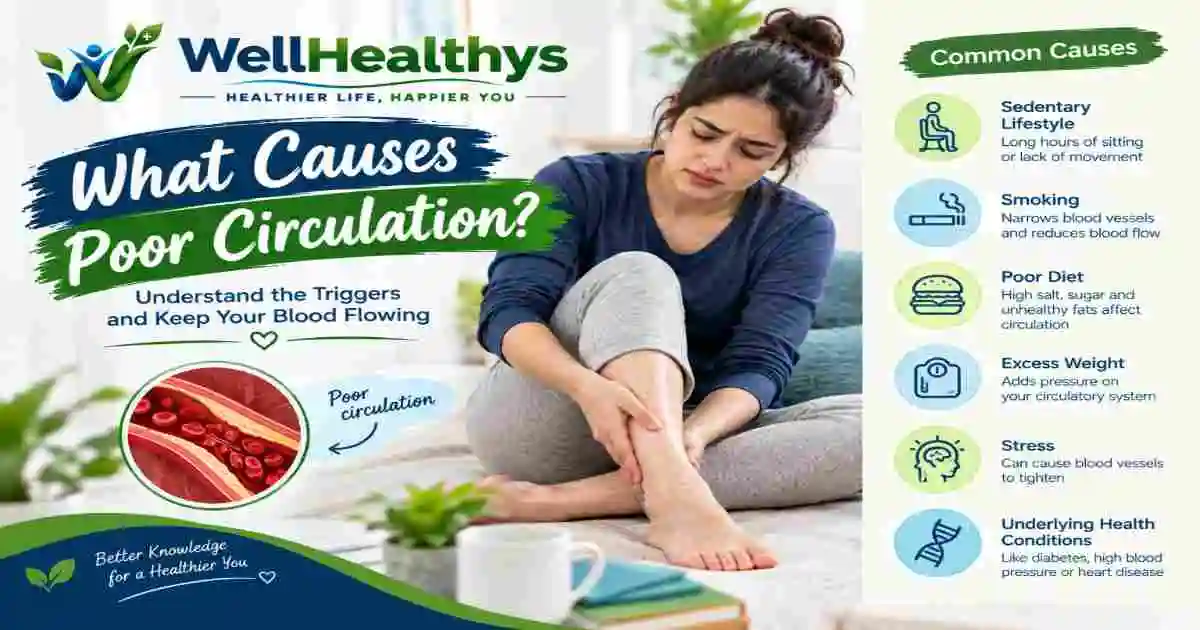
Cold feet that never seem to warm up, fingers that go numb for no clear reason, or a dull ache in your legs after a short walk. These are easy to brush off, until they start happening often enough that you begin wondering if something’s actually wrong.
WellHealthys put together this guide to walk through exactly what causes poor circulation, which signs are worth paying attention to, and what genuinely helps versus what’s just internet noise.
What Is Poor Circulation?
Poor circulation isn’t a disease on its own. It’s a sign that blood isn’t moving through your body the way it should, usually because something is narrowing, blocking, or damaging the blood vessels that carry it. Since your heart has to push blood all the way out to your fingers and toes, those far-flung areas are usually the first place you’ll notice a problem.
When blood flow slows down, the tissues in that area get less oxygen and fewer nutrients than they need, which is what produces the classic cold, numb, or achy feeling most people associate with circulation trouble.
What Causes Poor Circulation?

There isn’t one single cause behind what causes poor circulation. Instead, a handful of conditions and habits show up again and again as the culprits behind reduced blood flow.
Peripheral artery disease (PAD). This happens when plaque, a buildup of fat and cholesterol, narrows the arteries that carry blood to your limbs, most often your legs. According to Cleveland Clinic, it’s one of the most common medical causes of poor circulation, especially in people over 50.
Diabetes. High blood sugar over time damages blood vessels and nerves, which is why poor circulation and numbness in the feet are so common in people with diabetes.
Smoking. The chemicals in cigarettes damage the lining of your blood vessels and make them stiffer and narrower, directly reducing how well blood can move through them.
Obesity. Carrying extra weight puts more pressure on your veins and arteries, making it harder for them to do their job efficiently, especially in the legs.
Blood clots. A clot can partially or fully block a blood vessel, cutting off normal flow to whatever’s downstream of it. This can range from a minor annoyance to a medical emergency, depending on where it forms.
Varicose veins. When the valves inside your leg veins weaken, blood can pool instead of flowing efficiently back toward your heart, leading to those twisted, bulging veins along with a heavy or achy feeling.
High blood pressure. Constant extra force against your vessel walls can weaken them over time, making it harder for blood to move through smoothly.
Raynaud’s disease. This causes the small blood vessels in your fingers and toes to overreact to cold or stress, narrowing suddenly and cutting off blood flow temporarily, which is why fingers can turn white or blue in the cold.
A sedentary lifestyle. Sitting for long stretches without moving slows blood flow in your legs, which is part of why your feet can feel cold or numb after a long flight or a full day at a desk.
Signs and Symptoms of Poor Circulation

Poor circulation symptoms tend to show up first in the parts of your body farthest from your heart. Mass General Brigham notes that symptoms needing immediate attention include chest pain and sudden numbness, but more common everyday signs to watch for include:
- Cold hands, feet, or toes that don’t warm up easily
- Numbness or a “pins and needles” tingling sensation
- Muscle cramping or aching, especially in the legs during activity, that eases with rest
- Pale, bluish, or discolored skin
- Swelling in the legs, ankles, or feet
- Slow-healing cuts or sores, particularly on the feet
- Bulging, visible varicose veins
Not everyone experiences all of these, and having one or two mild symptoms occasionally isn’t automatically cause for alarm. It’s a pattern of recurring or worsening symptoms that’s worth paying closer attention to.
Poor Circulation vs. Just Having Cold Hands
Plenty of people simply run cold, without any underlying circulation problem at all. The difference usually comes down to consistency and accompanying symptoms.
Occasionally cold hands in a chilly room, that warm back up quickly once you’re indoors, are normal for a lot of people. Poor circulation is more likely if coldness is paired with numbness, color changes, pain, or if it happens regularly regardless of the temperature around you. If you’re ever unsure, that’s a reasonable thing to mention at your next checkup rather than something to self-diagnose.
How to Improve Circulation Naturally

For many people, especially those whose poor circulation is related to lifestyle rather than a diagnosed medical condition, some daily changes can genuinely help improve circulation naturally.
Move more often. Even short walks throughout the day help keep blood moving, especially if you sit for long stretches at work. Setting a reminder to stand up every hour can make a noticeable difference over time.
Elevate your legs. Propping your legs up above heart level for a few minutes a few times a day helps blood return from your legs more easily, especially if you’re prone to swelling.
Wear compression socks. These gently squeeze your legs to help push blood back toward your heart, and they’re commonly recommended for people with varicose veins or who stand or sit for long periods.
Stay hydrated. Blood is largely water, and dehydration makes it thicker and harder to circulate efficiently.
Quit smoking. This is one of the single most impactful changes you can make, since smoking directly damages and narrows blood vessels.
Manage your weight. Reducing excess weight takes pressure off your circulatory system and can meaningfully improve blood flow over time.
Try gentle, regular exercise. Movement that gets your heart pumping, even a daily walk, supports healthy circulation. If you’re deciding between structured workouts and something gentler, our breakdown of yoga versus physical exercise can help you figure out what fits your routine.
Foods That Support Healthy Circulation

Diet won’t fix an underlying medical cause on its own, but certain foods do support overall vascular health:
- Leafy greens like spinach and kale, which are high in nitrates that help blood vessels relax and widen
- Fatty fish such as salmon, rich in omega-3s that support healthy blood flow
- Citrus fruits, which contain vitamin C and flavonoids that support blood vessel strength
- Garlic, which some research links to modestly improved circulation
- Beets, another nitrate-rich food often associated with better blood flow
Cutting back on excess sodium and processed foods also helps, since both are linked to higher blood pressure, which puts extra strain on your vessels.
Sitting Too Long and Poor Circulation
If your day involves hours at a desk, this connection is worth understanding on its own. Prolonged sitting slows blood flow in your legs and has been linked to a range of health issues beyond just circulation. We’ve covered this in more detail in our guide on the health hazards of prolonged sitting, including simple ways to break up long stretches of sitting during a normal workday.
When to See a Doctor

Mild, occasional symptoms often respond well to the lifestyle changes above. But certain signs mean it’s time to get checked out rather than wait:
- Numbness or pain that doesn’t go away, or gets worse over time
- A leg or arm that suddenly feels cold, pale, or painful, which can signal a blood clot
- Wounds or sores that aren’t healing, especially on your feet
- Swelling in only one leg, which can be a sign of a blood clot
- Chest pain, shortness of breath, or sudden severe pain, which need emergency care right away
Poor circulation is often a symptom of an underlying condition like PAD, diabetes, or a clotting issue, so persistent symptoms are worth a proper diagnosis rather than managing on your own indefinitely.
Frequently Asked Questions
What is the fastest way to improve poor circulation?
There’s no instant fix, but moving around, especially after long periods of sitting, tends to bring the quickest noticeable relief for mild, lifestyle-related circulation issues. Elevating your legs and wearing compression socks can also help in the short term.
Can poor circulation be a sign of something serious?
Yes, sometimes. It can be an early sign of peripheral artery disease, diabetes-related nerve damage, or a blood clot. Persistent or worsening symptoms are worth having evaluated by a doctor rather than assumed to be harmless.
Does poor circulation go away on its own?
It depends on the cause. Circulation issues from prolonged sitting or cold weather often resolve once you move around or warm up. Circulation problems tied to an underlying condition like PAD or diabetes typically need ongoing management rather than resolving by themselves.
What vitamins help with poor circulation?
Nutrients like vitamin C, vitamin E, and iron support healthy blood vessels and blood flow. Getting these through a balanced diet is generally a good idea, though if you’re considering supplements, it’s worth checking with your doctor first, especially if you take other medications.
Is poor circulation more common with age?
Yes. Blood vessels naturally lose some flexibility over time, and conditions like PAD, diabetes, and high blood pressure, all of which affect circulation, become more common as people get older.
Getting Support with WellHealthys
Poor circulation is common, and for a lot of people, it’s manageable with a few consistent habit changes. Understanding what’s actually behind those cold hands or achy legs is the first step toward knowing whether this is something to adjust at home or something to bring to your doctor.
At WellHealthys, we’ll keep building clear, practical guides to help you understand what your body is telling you. For more on staying active throughout your day, check out our piece on the health hazards of prolonged sitting, or explore our full Health and Wellness sections for more.
What to Do Next
- Start moving more, especially if your symptoms show up after long periods of sitting or standing still.
- Track your symptoms, noting when they happen and how long they last, to share with your doctor if needed.
- See a doctor if symptoms are persistent, worsening, or affect only one limb.
- Subscribe to WellHealthys for more practical health guides like this one.
Medical Disclaimer
This article is for informational purposes only and is not a substitute for professional medical advice, diagnosis, or treatment. WellHealthys is not a healthcare provider. Always seek the advice of a qualified physician with any questions about circulation, numbness, or vascular symptoms. Never disregard professional medical advice or delay seeking it because of something you have read here. If you are experiencing chest pain, sudden numbness, or signs of a medical emergency, contact your doctor or call 911 immediately.
About the Author
Written by Prashant Kashyap, Founder at WellHealthys. Prashant is not a licensed medical professional. He researches and compiles health information from established clinical sources, including Cleveland Clinic and Mass General Brigham, to help readers understand topics like poor circulation in plain, accessible language. This article should not replace advice from a qualified doctor.
