


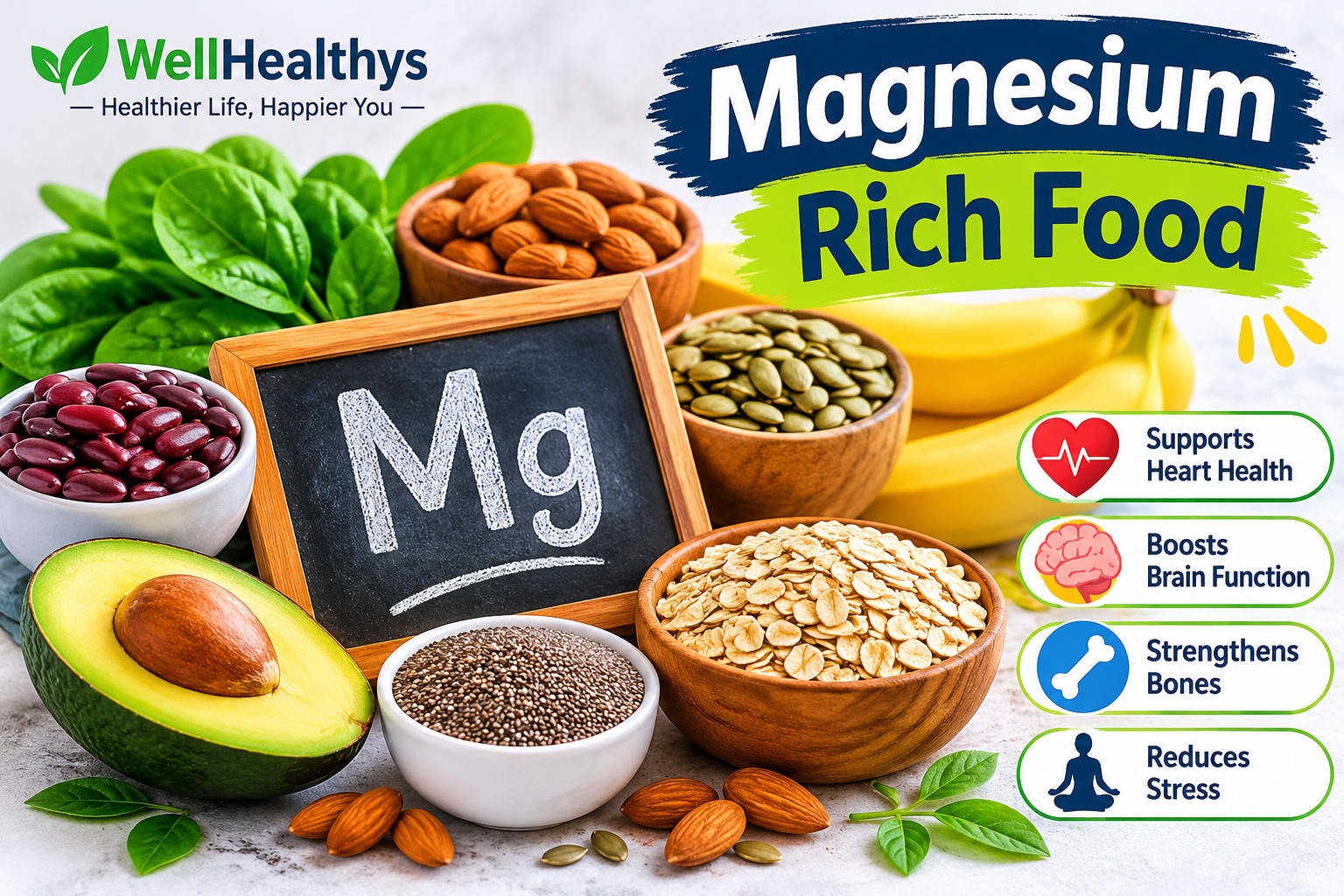
Quick Answer: Which Foods Are High in Magnesium?
The best magnesium rich food sources include pumpkin seeds, chia seeds, almonds, spinach, cashews, peanuts, black beans, edamame, and whole grains. Among commonly eaten foods, roasted pumpkin seeds provide approximately 156 mg of magnesium per 1-ounce serving, while chia seeds provide around 111 mg per ounce. Adults generally need 310–420 mg of magnesium daily, depending on age and sex. Adding a variety of foods high in magnesium to your meals can help you meet your daily nutritional needs.
| Food | Serving size | Magnesium |
| Roasted pumpkin seeds | 1 oz | 156 mg |
| Chia seeds | 1 oz | 111 mg |
| Dry-roasted almonds | 1 oz | 80 mg |
| Boiled spinach | ½ cup | 78 mg |
| Dry-roasted cashews | 1 oz | 74 mg |
| Oil-roasted peanuts | ¼ cup | 63 mg |
| Black beans, cooked | ½ cup | 60 mg |
| Edamame, cooked | ½ cup | 50 mg |
Values are approximate and can vary by variety, preparation, and brand. Selected figures are based on the NIH Office of Dietary Supplements food-source table.
Have you ever wondered whether your everyday meals provide enough magnesium? You may already be eating some of the best sources without realizing it. Ingredients such as nuts, seeds, leafy vegetables, beans, and whole grains can contribute meaningful amounts of this essential mineral.
The good news is that you do not need expensive products or complicated recipes to improve your magnesium intake. Everyday options such as daal, chickpeas, peanuts, spinach, and whole wheat foods can all help. This guide from WellHealthys explains the best magnesium-rich foods, their serving sizes, nutritional benefits, and practical ways to include them in your daily routine.
What Is Magnesium and Why Does Your Body Need It?
Magnesium is an essential mineral involved in more than 300 biochemical reactions in the body. It supports normal muscle and nerve function, energy production, bone health, protein formation, and blood glucose regulation.
Your body cannot produce magnesium on its own, so you need to obtain it through food and, when advised by a healthcare professional, supplements.
Eating a variety of natural sources of magnesium is a practical way to support your nutritional needs. Foods such as leafy greens, legumes, nuts, seeds, and whole grains are especially useful because many also provide fiber, protein, and other essential nutrients.
20 Best Magnesium Rich Food Sources to Add to Your Diet
This magnesium foods list includes seeds, nuts, vegetables, legumes, grains, dairy products, and other everyday options. The amounts below refer to the stated serving sizes, not necessarily equal portions of food.
1. Pumpkin Seeds
Pumpkin seeds are among the most concentrated everyday sources of magnesium. One ounce of roasted pumpkin seeds provides approximately 156 mg.
You can add them to oatmeal, salads, homemade trail mix, or yogurt. They are also a convenient snack when you want a nutrient-dense option between meals.
2. Chia Seeds
One ounce of chia seeds contains approximately 111 mg of magnesium. They also provide fiber and plant-based omega-3 fatty acids.
Mix chia seeds into yogurt, smoothies, or overnight oats. You can also soak them in milk or a suitable plant-based drink to make chia pudding.
3. Almonds
One ounce of dry-roasted almonds provides approximately 80 mg of magnesium. Almonds are also a source of vitamin E, protein, and healthy fats.
A small handful can be added to breakfast or eaten as a snack. If you prefer, use unsweetened almond butter as another option.
4. Spinach
Cooked spinach is one of the useful vegetables high in magnesium. Half a cup of boiled spinach contains approximately 78 mg.
Add spinach to omelets, soups, daal, or vegetable dishes. Cooking reduces its volume, making it easier to eat a useful portion.
5. Cashews
One ounce of dry-roasted cashews contains approximately 74 mg of magnesium. They also provide copper and other nutrients.
Enjoy a small portion as a snack or add chopped cashews to salads, vegetable dishes, and homemade sauces.
6. Peanuts
A quarter cup of oil-roasted peanuts provides approximately 63 mg of magnesium. Peanuts are also an affordable source of plant-based protein and healthy fats.
You can eat them plain, add them to homemade snacks, or use peanut butter on whole-grain toast. Choose options with little or no added salt and sugar when possible.
7. Shredded Wheat Cereal
Two large biscuits of shredded wheat cereal provide approximately 61 mg of magnesium. Whole-grain cereals can contribute magnesium along with dietary fiber.
Check the nutrition label before buying breakfast cereal because magnesium content differs between products. Some cereals are also fortified with additional minerals.
8. Soy Milk
One cup of plain or vanilla soymilk provides approximately 61 mg of magnesium in the NIH food-source table.
Soy milk can be used in smoothies, breakfast cereal, or oatmeal. Check the product label because nutritional values vary between brands and fortified varieties.
9. Black Beans
Half a cup of cooked black beans contains approximately 60 mg of magnesium. They also provide fiber and plant-based protein.
Add black beans to soups, salads, rice dishes, or wraps. Beans are a practical choice for people looking for affordable foods containing magnesium.
10. Edamame
Half a cup of cooked, shelled edamame provides approximately 50 mg of magnesium. These young soybeans also contain protein and fiber.
Serve edamame as a snack, add it to salads, or mix it into rice and vegetable bowls.
11. Peanut Butter
Two tablespoons of smooth peanut butter provide approximately 49 mg of magnesium.
Spread it on whole-grain toast, mix it into oatmeal, or add a spoonful to a smoothie. Compare labels and choose a variety with minimal added sugar and salt.
12. Baked Potato With Skin
A 3.5-ounce baked potato with its skin provides approximately 43 mg of magnesium.
The skin also contributes fiber. Try a baked potato with plain yogurt, beans, or vegetables for a more balanced meal.
13. Brown Rice
Half a cup of cooked brown rice contains approximately 42 mg of magnesium.
Brown rice retains more of the grain’s outer layers than refined white rice. Serve it with lentils, vegetables, beans, or grilled fish.
14. Plain Low-Fat Yogurt
An 8-ounce serving of plain low-fat yogurt provides approximately 42 mg of magnesium.
Yogurt also supplies protein and calcium. Pair it with chia seeds, almonds, or fruit for a convenient breakfast or snack.
15. Oatmeal
One packet of instant oatmeal provides approximately 36 mg of magnesium, although the amount varies by product.
Prepare oatmeal with milk or fortified soy milk and add banana, chia seeds, or almonds. This simple breakfast can combine several magnesium-rich foods in one meal.
16. Kidney Beans
Half a cup of canned kidney beans provides approximately 35 mg of magnesium.
Rinse canned beans before using them to reduce some of the added sodium. Add them to soups, rice dishes, salads, or homemade bean curry.
17. Banana
One medium banana provides approximately 32 mg of magnesium.
Bananas are easy to add to breakfast, smoothies, or snacks. They are not the highest source of magnesium, but they can contribute to an overall balanced eating pattern.
18. Milk
One cup of milk provides approximately 27 mg of magnesium, with the exact amount depending on the type and product.
Drink it on its own, add it to oatmeal, or use it in smoothies. Fortified plant-based alternatives may have different nutrient levels, so check their labels.
19. Salmon
A 3-ounce serving of cooked Atlantic farmed salmon provides approximately 26 mg of magnesium. Salmon is better known for its protein and omega-3 fatty acids, but it can still contribute to your overall intake.
Serve it with brown rice and vegetables for a balanced meal.
20. Avocado
Half a cup of cubed avocado provides approximately 22 mg of magnesium, depending on size and variety.
Add avocado to salads, sandwiches, or whole-grain toast. It also provides fiber and unsaturated fats.
Food values in this list are approximate. For items not included in the NIH selected-food table, check the specific food and preparation method in USDA FoodData Central.
Highest Magnesium Foods: Comparison by Serving Size

If you want to identify the foods with the highest magnesium content, compare them using realistic serving sizes. A food may look impressive per 100 grams but be less practical if people usually eat a much smaller portion.
| Food | Serving | Magnesium |
| Pumpkin seeds, roasted | 1 oz | 156 mg |
| Chia seeds | 1 oz | 111 mg |
| Almonds, dry-roasted | 1 oz | 80 mg |
| Spinach, boiled | ½ cup | 78 mg |
| Cashews, dry-roasted | 1 oz | 74 mg |
| Peanuts, oil-roasted | ¼ cup | 63 mg |
| Black beans, cooked | ½ cup | 60 mg |
| Edamame, cooked | ½ cup | 50 mg |
Comparing magnesium per serving gives you a more practical idea of what you can get from your usual meals. For example, adding pumpkin seeds to breakfast can provide a substantial amount, while beans and leafy greens can contribute throughout the day.
Affordable Magnesium-Rich Foods for Everyday Meals
You do not have to spend a lot to include more magnesium in your diet. Several affordable ingredients commonly used in South Asian kitchens are useful natural sources of magnesium.
- Daal and lentils: Add cooked lentils to lunch or dinner for magnesium, fiber, and plant-based protein.
- Chickpeas (chana): Use boiled chickpeas in chaat, salads, or curry.
- Peanuts: Keep a small portion available for a convenient snack.
- Spinach (palak): Add it to daal, omelets, or vegetable dishes.
- Oats: Prepare oatmeal with milk, soy milk, or seeds.
- Brown rice and whole grains: Use them as alternatives to refined grains when they suit your meals and preferences.
For more ideas, explore our guide to a protein-rich vegetarian diet.
How Much Magnesium Do Adults Need Daily?

Your daily magnesium requirement depends on your age, sex, and life stage. The following values are the Recommended Dietary Allowances (RDA) for adults from the NIH Office of Dietary Supplements.
| Age group | Men | Women |
| 19–30 years | 400 mg | 310 mg |
| 31–50 years | 420 mg | 320 mg |
| 51 years and older | 420 mg | 320 mg |
For pregnancy, the recommended amount is 350 mg per day for ages 19–30 and 360 mg for ages 31–50. For breastfeeding, it is 310 mg for ages 19–30 and 320 mg for ages 31–50.
These recommendations refer to total daily magnesium intake from food, beverages, and supplements. Individual needs can differ, so consult a healthcare professional if you have a medical condition or concerns about your nutrient intake.
Read the NIH magnesium fact sheet for detailed intake recommendations.
Health Benefits of Eating Magnesium-Rich Foods

Magnesium supports several important functions in the body. Getting enough through a varied diet contributes to normal physiological processes, although no single food can prevent or treat a medical condition.
Supports Normal Muscle and Nerve Function
Magnesium helps muscles contract and relax and supports communication between nerves and muscles. It is one of several minerals involved in maintaining normal muscle function.
Contributes to Bone Health
A large amount of the body’s magnesium is stored in bones. Magnesium also plays a role in normal bone structure and the regulation of other nutrients involved in bone health.
Helps With Energy Production
Your body uses magnesium in processes that produce and use energy. It also supports protein formation and other essential cellular activities.
Supports Normal Blood Glucose Regulation
Magnesium is involved in processes that help regulate blood glucose. Eating magnesium-containing foods can contribute to a balanced diet, but these foods should not be considered a treatment for diabetes.
Helps Maintain a Normal Heart Rhythm
Magnesium contributes to normal electrical activity in the heart and supports muscle and nerve function. A balanced diet is one part of maintaining overall cardiovascular health.
For more information about the mineral’s functions, read MedlinePlus: Magnesium in the diet.
How to Add More Magnesium to Your Daily Diet
Increasing magnesium intake does not require changing every meal. Start with small additions that fit your existing routine.
- Improve your breakfast: Add chia seeds or almonds to oatmeal or yogurt.
- Include legumes: Add daal, chickpeas, or beans to lunch and dinner.
- Choose leafy vegetables: Include spinach or other green vegetables in regular meals.
- Use whole grains: Try brown rice or whole-grain bread when suitable.
- Choose balanced snacks: Have a small serving of peanuts or pumpkin seeds instead of relying on highly processed snacks.
- Build variety: Rotate different nuts, seeds, vegetables, and legumes rather than depending on one food.
Many of these ingredients also contain fiber. You can read our guide on how to improve gut health naturally for more practical ideas about including fiber-rich foods in everyday meals.
A Simple One-Day Meal Plan With Magnesium-Rich Foods

Here is an example of how you can include several magnesium-rich foods in a normal day. Adjust portions according to your appetite, energy needs, allergies, and dietary preferences.
| Meal | Food idea |
| Breakfast | Oatmeal with chia seeds and banana |
| Morning snack | A small handful of almonds |
| Lunch | Brown rice with daal and cooked spinach |
| Afternoon snack | Plain yogurt or roasted chickpeas |
| Dinner | Beans or tofu with vegetables and whole grains |
This is a sample meal structure, not a prescribed diet or a calculated magnesium total. The actual magnesium content depends on ingredients, portion sizes, and preparation methods.
For more meal inspiration, see our guide to a balanced weight loss plan with desi food.
Does Cooking Affect the Magnesium Content of Food?
Cooking and food processing can change the amount of magnesium in a serving. For example, boiling vegetables and discarding the cooking water may cause some minerals to move into the water.
Refining grains can also reduce magnesium because the bran and germ, which contain valuable nutrients, are removed. Whole grains generally retain more of these nutrients than highly refined versions.
To make the most of your ingredients:
- Use whole grains more often.
- Avoid overcooking vegetables when possible.
- Use cooking water in soups or gravies when appropriate.
- Store nuts and seeds properly to maintain freshness.
- Check food labels when choosing packaged cereals and plant-based drinks.
Magnesium From Food vs. Supplements: What’s the Difference?
Most people should focus on a varied diet as their first source of magnesium. Foods provide the mineral alongside other nutrients, such as fiber, protein, and healthy fats.
Magnesium supplements may be recommended in certain situations, but they are not necessary for everyone. Taking high doses without professional advice can cause diarrhea, nausea, and abdominal cramps.
The adult upper limit of 350 mg per day applies to magnesium from supplements and medications, not magnesium naturally present in food. People with kidney problems or those taking medicines that may interact with magnesium should speak with a healthcare professional before using supplements.
Do not start a supplement simply because you experience tiredness, muscle cramps, or another symptom. These issues can have many possible causes and may require medical assessment.
Frequently Asked Questions About Magnesium-Rich Foods
1. Which food has the highest magnesium content?
Roasted pumpkin seeds are among the richest commonly eaten sources listed by the NIH. A one-ounce serving provides approximately 156 mg of magnesium.
2. What fruits are high in magnesium?
Bananas and avocados contain magnesium, although they provide less per serving than pumpkin seeds, chia seeds, and many nuts. They can still contribute to your daily intake as part of a varied diet.
3. Which vegetables are high in magnesium?
Spinach is a useful choice. Half a cup of boiled spinach provides approximately 78 mg of magnesium. Other leafy greens can also contribute, although amounts vary.
4. Can vegetarians get enough magnesium from food?
Yes. Vegetarians can obtain magnesium from pumpkin seeds, chia seeds, almonds, cashews, beans, lentils, spinach, oats, and whole grains. Eating a variety of these foods can help meet daily requirements.
5. Are eggs a good source of magnesium?
Eggs contain some magnesium, but they are not considered one of the richest sources. Seeds, nuts, legumes, and leafy vegetables generally provide more magnesium per serving.
6. Can I get enough magnesium from food alone?
Many people can meet their magnesium needs through a varied diet that includes nuts, seeds, legumes, whole grains, and leafy vegetables. However, individual needs and health conditions differ. A healthcare professional can help assess whether you need additional support.
7. Kya pumpkin seeds roz kha sakte hain?
Ji haan, agar aapko allergy ya koi medical restriction nahi hai, to pumpkin seeds ko balanced diet mein shamil kar sakte hain. Aik ounce roasted pumpkin seeds mein taqreeban 156 mg magnesium hota hai. Portion ka khayal rakhein kyun ke seeds mein calories bhi hoti hain.
8. Magnesium ke liye sab se sasti ghizayein kaunsi hain?
Daal, chana, moong beans, peanuts, oats aur palak budget-friendly options ho sakte hain. Inhein apne regular meals mein shamil karna magnesium intake barhane ka practical tareeqa hai.
9. Kya sirf banana khane se magnesium ki kami poori ho sakti hai?
Nahi, sirf banana par depend karna behtar approach nahi hai. Banana magnesium provide karta hai, lekin pumpkin seeds, nuts, beans, spinach aur whole grains ko bhi diet mein shamil karein. Agar deficiency ka shak ho to healthcare professional se mashwara karein.
Start Adding Magnesium to Your Daily Meals
You do not need to change your entire diet to include more magnesium. Start with one or two simple additions, such as pumpkin seeds at breakfast, almonds as a snack, or daal and spinach at lunch.
Choose foods that fit your budget, taste, and daily routine. A varied eating pattern is more useful than relying on a single ingredient.
For more practical nutrition ideas, explore the healthy eating guides at WellHealthys. You can also read our guide to protein-rich vegetarian foods for more plant-based meal inspiration.
Author Section
Written by: WellHealthys Editorial Team
The WellHealthys Editorial Team creates easy-to-understand health, nutrition, fitness, and wellness content to help readers make informed everyday choices. Our goal is to explain health topics in clear language and support practical, evidence-informed lifestyle decisions.
Explore more guides on WellHealthys.
Medical Disclaimer
This article is for general educational and informational purposes only. It is not a substitute for professional medical advice, diagnosis, or treatment. Nutritional values can vary depending on food variety, serving size, preparation, and brand. If you have kidney disease, a diagnosed nutrient deficiency, take regular medication, or are considering magnesium supplements, consult a qualified healthcare professional before making changes to your diet or supplement routine.
