


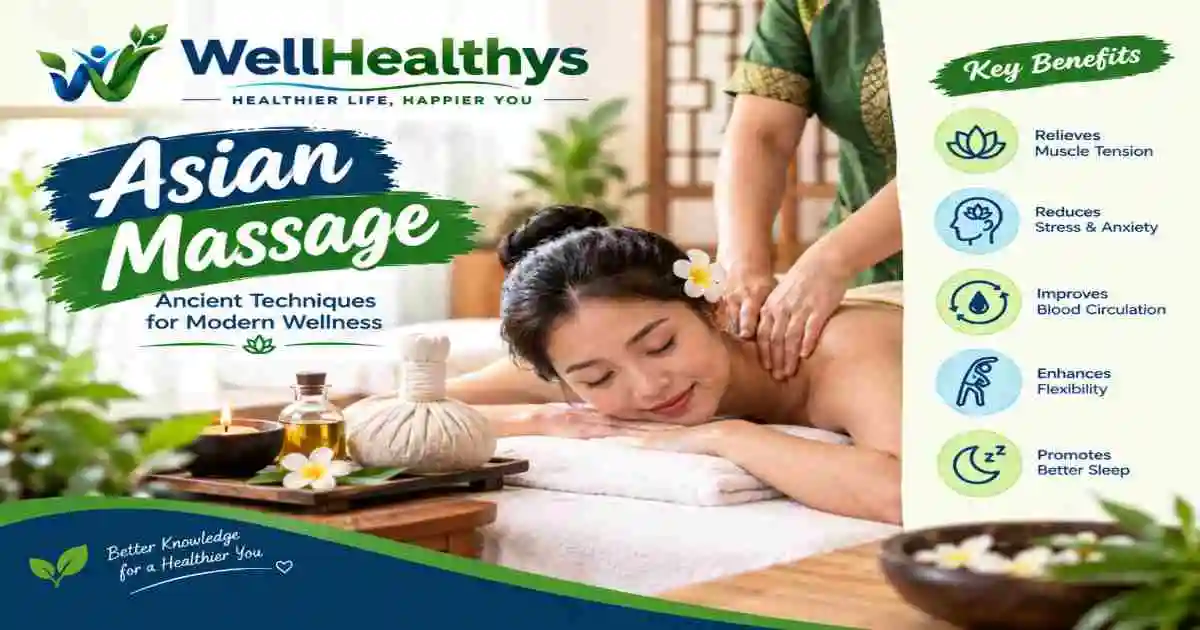
Walk into most spa menus and you’ll spot a handful of Asian massage therapy styles, often lumped together under one umbrella term despite being technically very different. Thai massage and Japanese Shiatsu have almost nothing in common technique-wise, and neither resembles a Chinese Tuina session. If you’ve ever stared at a spa menu unsure which one to book, you’re not alone.
WellHealthys put together this guide to break down what actually separates these traditions, what each one feels like, and how to figure out which fits what your body actually needs right now.
What Is Asian Massage Therapy?

Asian massage therapy isn’t one single technique. According to the American Massage Therapy Association, it’s a broad category covering multiple distinct bodywork traditions that developed independently across different Asian countries, each shaped by its own medical philosophy, whether that’s the meridian and energy-flow concepts behind Traditional Chinese Medicine, or the dosha-balancing principles of Ayurveda in India.
What ties them together loosely is a shared emphasis on pressure points, energy pathways, and treating the body as a connected system rather than isolated muscle groups, which is a notably different starting point than Western massage styles like Swedish massage.
Thai Massage

Sometimes called Nuad Thai or “lazy yoga,” Thai massage is one of the most physically active massage styles you can book. You stay fully clothed and lie on a floor mat while the practitioner uses their hands, knees, forearms, and feet to guide your body through a series of assisted stretches, alongside rhythmic palm and thumb pressure along energy lines.
Best for: People who want to improve flexibility, athletes managing tight muscles, or anyone who prefers an active, full-body session over passive relaxation.
What to expect: No oils, loose comfortable clothing, and a session that feels more like a guided stretching practice than a typical massage.
Japanese Shiatsu
Shiatsu, which translates to “finger pressure,” is a Japanese bodywork technique that applies rhythmic, sustained pressure using the thumbs, palms, and sometimes elbows, targeting specific points along the body’s meridians. Unlike Thai massage, Shiatsu is generally gentler and more localized, focusing on precise pressure rather than full-body stretching.
Best for: People seeking stress relief, tension headaches, or a calming session without deep tissue intensity.
What to expect: Performed clothed, usually on a mat or low table, with steady, rhythmic pressure rather than kneading or rubbing motions.
Chinese Tuina
Tuina (pronounced twee-nah) is one of the oldest documented forms of bodywork, developed alongside acupuncture and herbal medicine as part of Traditional Chinese Medicine. It combines kneading, rolling, pressing, and rubbing techniques with acupressure on specific points, aiming to correct blockages in the body’s energy flow.
Best for: Chronic muscle tension, joint stiffness, or people already familiar with Traditional Chinese Medicine who want a complementary bodywork approach.
What to expect: More vigorous and targeted than Shiatsu, often performed through light clothing, with a focus on specific problem areas rather than a full-body routine.
Indian Ayurvedic Massage (Abhyanga)

Ayurvedic massage, often called Abhyanga, is rooted in Ayurveda, India’s traditional system of medicine. It uses warm herbal oils, chosen based on your dosha or body constitution, applied with long, rhythmic strokes meant to balance the body, support circulation, and calm the nervous system.
Best for: Deep relaxation, dry skin, or anyone drawn to a more ritual-based, oil-heavy massage experience. For a broader look at Ayurvedic wellness practices beyond massage, our guide on Ayurvedic tips for healthy aging covers more ground.
What to expect: Generous use of warm oil, a slower pace than Thai or Tuina, and typically performed with minimal clothing under a sheet, similar to a Swedish massage setup.
Comparing the Main Types of Asian Massage
| Thai | Shiatsu | Tuina | Ayurvedic | |
| Clothing | Fully clothed | Fully clothed | Light clothing | Minimal, oil-based |
| Pressure style | Stretching + pressure | Rhythmic finger pressure | Kneading + acupressure | Long rhythmic strokes |
| Best for | Flexibility, athletes | Stress, tension | Chronic tightness | Deep relaxation |
| Origin | Thailand | Japan | China | India |
Benefits of Asian Massage Therapy

Across these different traditions, a few benefits tend to show up consistently:
- Reduced stress and anxiety, through both the physical pressure work and the calming, ritual-like pace of most sessions
- Improved circulation, particularly with oil-based and kneading techniques like Ayurvedic massage and Tuina
- Better flexibility and range of motion, especially with Thai massage’s assisted stretching
- Muscle tension relief, from targeted pressure-point work in Shiatsu and Tuina
- Support for sleep quality, since the parasympathetic nervous system response triggered by massage tends to promote deeper rest afterward
How to Choose the Right Type for You

If you’re not sure where to start, let your goal guide the decision:
- Want to move better and loosen tight muscles? Try Thai massage.
- Dealing with stress or tension headaches? Shiatsu’s gentler, targeted pressure is a good fit.
- Managing chronic stiffness or recovering from an injury? Tuina’s more vigorous approach may help.
- Looking for pure relaxation and don’t mind oil? Ayurvedic Abhyanga delivers a slower, more indulgent experience.
It’s also worth mentioning your goals to the practitioner before the session starts. Many spas and therapists will adjust pressure and technique based on what you’re hoping to get out of it.
Is Asian Massage Therapy Safe?
For most healthy adults, these massage styles are considered safe, but a few situations call for extra caution. Pregnant individuals, people with certain skin conditions, recent injuries, or blood clotting disorders should check with a doctor before booking a session, particularly for more intense styles like Thai massage or Tuina.
Always book with a licensed, trained massage therapist. In the United States, licensing requirements vary by state, so checking a practitioner’s credentials before your first visit is a reasonable step.
Frequently Asked Questions
What is the most relaxing type of Asian massage?
Ayurvedic Abhyanga and Shiatsu tend to be the most relaxing, gentle options, since both focus on calming techniques rather than intense stretching or vigorous pressure.
Do you have to be undressed for Asian massage therapy?
It depends on the style. Thai massage and Shiatsu are performed fully clothed. Tuina is usually done through light clothing. Ayurvedic massage typically involves minimal clothing due to the oils used, similar to a Western-style massage.
How is Thai massage different from Shiatsu?
Thai massage is far more active, involving full-body stretching and yoga-like movements. Shiatsu is more stationary, focusing on rhythmic finger and palm pressure at specific points without the stretching component.
Which type of Asian massage is best for chronic pain?
Tuina is often recommended for chronic muscle tightness and joint stiffness, thanks to its more targeted, vigorous pressure techniques. That said, a licensed therapist can help match the style to your specific pain pattern.
How often should you get an Asian massage for the benefits to last?
This varies by person and goal, but many people find that a session every 2 to 4 weeks helps maintain the stress-relief and flexibility benefits, while chronic issues may benefit from a more frequent schedule initially.
Getting Support with WellHealthys
Asian massage therapy covers a genuinely wide range of techniques, and the right one really does depend on what your body needs on a given day. Whether that’s the active stretch of Thai massage or the slow, oil-based calm of Ayurvedic Abhyanga, understanding the differences makes it a lot easier to book the right session instead of guessing off a spa menu.
At WellHealthys, we’ll keep covering wellness practices that actually help, without the guesswork. Explore more in our Wellness and Health sections, or check out our piece on the five stress levels if stress relief is what’s bringing you here.
What to Do Next
- Identify your main goal (flexibility, stress relief, chronic tension, or relaxation) before booking.
- Check practitioner credentials and licensing before your first session.
- Mention any health conditions to your therapist beforehand, especially if pregnant or managing an injury.
- Subscribe to WellHealthys for more practical wellness guides like this one.
Medical Disclaimer
This article is for informational purposes only and is not a substitute for professional medical advice. WellHealthys is not a healthcare provider. If you have a medical condition, are pregnant, or are recovering from an injury, consult a qualified physician before starting any new massage or bodywork therapy.
About the Author
Written by Prashant Kashyap, Founder at WellHealthys. Prashant is not a licensed medical or massage professional. He researches and compiles wellness information from established sources to help readers understand topics like Asian massage therapy in plain, accessible language.
