


A colleague of mine spent nearly two years blaming her constant fatigue and stubborn weight gain on “just getting older” and being busy at work. It wasn’t until a routine blood test, ordered for something unrelated, flagged a thyroid issue that she realized her hormones, not her willpower or age, had been driving most of it. WellHealthys hears versions of this story often, cases of hormonal imbalance symptoms in women going unaddressed for months or years before connecting the dots, partly because the symptoms are so easy to attribute to something else.
What Counts as “Normal” Hormonal Fluctuation vs an Imbalance?
Hormones naturally rise and fall throughout the menstrual cycle, and mild mood shifts, slight bloating, or a few days of low energy before your period are expected, not genuine signs of hormonal imbalance worth worrying about.
An imbalance is different in degree and duration. It tends to involve symptoms that are more severe than your usual pattern, that don’t follow a predictable cyclical rhythm, or that persist well beyond what you’d normally experience around your period. If you find yourself thinking “this doesn’t feel like my usual PMS” or “this has been going on for months, not days,” that’s a reasonable signal to pay closer attention rather than dismiss it. Our Women’s Health section has more on understanding these cyclical patterns.
Common Hormonal Imbalance Symptoms in Women (By Category)
Symptoms of hormonal imbalance show up differently depending on which hormones are affected, so grouping them makes the picture easier to follow.
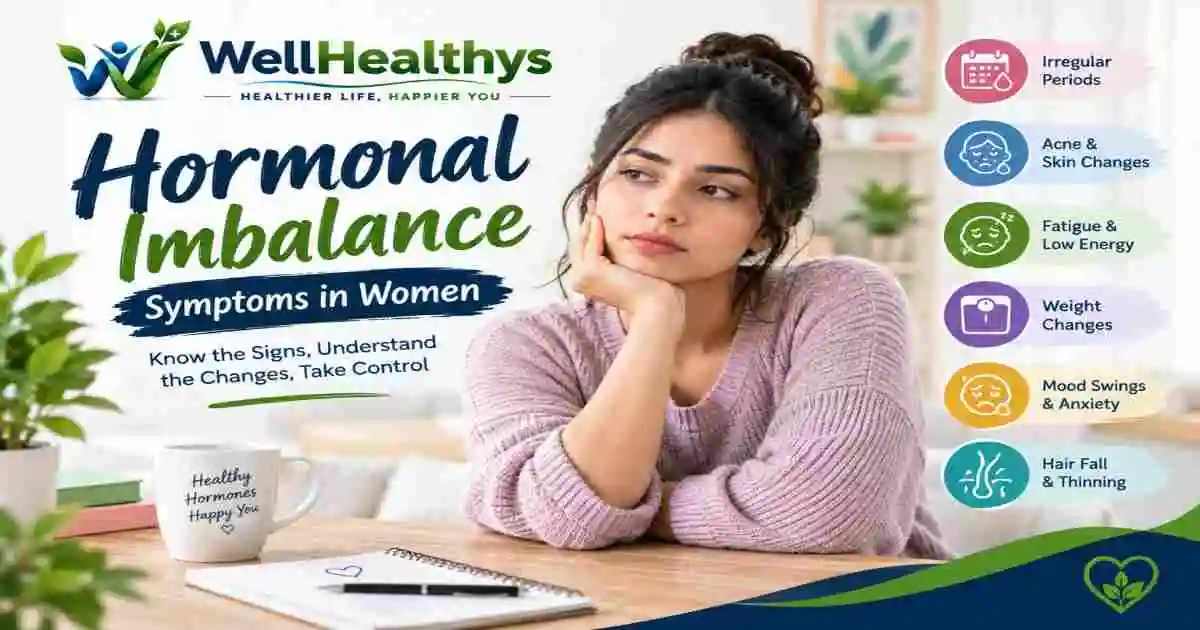
Menstrual and reproductive symptoms include irregular or missed periods, unusually heavy or light bleeding, and difficulty conceiving. Metabolic symptoms include unexplained weight gain or difficulty losing weight despite consistent diet and exercise, along with fatigue that doesn’t improve with rest. Skin and hair symptoms include persistent adult acne, unusual hair thinning, or excess hair growth in places like the chin or upper lip.
Mood and energy symptoms include anxiety, irritability, or low mood that feels disconnected from your usual emotional pattern, along with sleep disturbances. Most women won’t experience all of these at once, a cluster of two or three persisting together is more meaningful than any single symptom in isolation.
Symptoms by Life Stage: Teens, 20s-30s, Perimenopause, Menopause

Hormonal imbalance doesn’t look the same at every age, and knowing what’s more common at your stage of life helps you interpret your own symptoms more accurately.
In the teenage years, irregular periods, acne, and early signs of PCOS, like excess hair growth or persistent breakouts, are the symptoms worth watching, since this is often when PCOS first becomes noticeable. In your 20s and 30s, the reproductive years, symptoms often center on cycle irregularities, fertility concerns, and PCOS-related weight or skin changes.
Perimenopause, which typically starts in the 40s, brings a different pattern, unpredictable periods, hot flashes, night sweats, and mood swings that feel less predictable than earlier PMS. Menopause itself, once periods have stopped for 12 consecutive months, often involves continued hot flashes, vaginal dryness, and changes in bone and heart health risk that are worth monitoring with a doctor rather than home remedies alone. Our Wellness section has more on supporting overall wellbeing through these transitions.
PCOS: A Closer Look at One of the Most Common Causes

PCOS deserves its own section here, because it’s both extremely common and frequently missed for years before diagnosis.
Polycystic ovary syndrome affects a meaningful share of women of reproductive age, and research specific to India has found prevalence estimates ranging from roughly 7% to nearly 20% depending on the diagnostic criteria used, with some regions showing even higher rates. Globally, a large share of PCOS cases go undiagnosed for years, often because PCOS symptoms in women like irregular periods or acne get treated individually rather than recognized as connected.
Common signs include irregular or absent periods, excess facial or body hair, persistent acne, and difficulty losing weight, though not everyone with PCOS experiences every symptom. This isn’t something to self-diagnose from a list, PCOS is confirmed through a combination of symptoms, blood tests, and sometimes an ultrasound, but recognizing the pattern is often what finally prompts women to get properly evaluated after years of disconnected symptoms.
How Diet and Lifestyle Influence Hormonal Health
While diet and lifestyle changes aren’t a substitute for medical care when something’s genuinely imbalanced, learning how to balance hormones naturally through everyday habits does influence hormonal health in measurable ways.
Chronic sleep deprivation disrupts cortisol and can indirectly affect reproductive hormones over time, which is part of why sleep quality often improves cycle regularity for some women. Highly processed diets and significant blood sugar swings can worsen insulin resistance, which is closely tied to PCOS symptoms specifically.
Chronic, unmanaged stress keeps cortisol elevated, which can suppress reproductive hormone signaling in ways that show up as irregular cycles. None of this means lifestyle changes alone will resolve a genuine hormonal imbalance, but they’re a reasonable and low-risk starting point alongside, not instead of, proper medical evaluation. Our Nutrition section has more on building sustainable eating habits that support this.
How to Track Your Symptoms Before Seeing a Doctor

Walking into a doctor’s appointment with specific, tracked information makes the conversation far more productive than trying to describe things from memory.
Start tracking your cycle length and any irregularities, even a basic calendar app or period-tracking app works fine for this. Note when specific symptoms show up, weight changes, mood shifts, skin changes, and whether they seem tied to a particular point in your cycle or appear constantly.
Keep this log for at least two to three months if possible, since a single unusual cycle often means less than a consistent pattern over several months. Bring this record to your appointment, doctors can work with specific, dated information far more effectively than a general “I’ve been feeling off lately.”
What to Expect When You See a Doctor
Not knowing what a doctor’s visit will actually involve keeps a lot of women from booking one, so here’s a realistic picture.
A doctor will typically start with a detailed conversation about your symptoms, cycle history, and family history, often more useful than any single test on its own. Blood tests commonly check hormones like TSH for thyroid function, estrogen, progesterone, and testosterone levels, and sometimes insulin or glucose if PCOS is suspected.
Depending on your symptoms, an ultrasound may be recommended to check the ovaries. None of this requires you to already know what’s wrong, describing your symptoms and your tracked pattern is enough to start the process. Our Diseases & Conditions section has more on understanding specific test results and conditions.
For Family Members: How to Support Someone Experiencing These Symptoms
If you’re reading this on behalf of a partner, daughter, or family member, a few things genuinely help.
Take the symptoms seriously rather than attributing them to stress or “just hormones” as a way to dismiss them, since that framing often delays proper evaluation. Encourage tracking symptoms rather than pushing for an immediate diagnosis or fix, since patterns over months are more useful than reacting to any single bad day.
Offer to help book or accompany them to an appointment if that feels supportive, without pressuring them if they’re not ready. Most importantly, avoid suggesting they just “manage stress better” as a complete solution, since that can minimize what may be a legitimate medical issue needing evaluation.
Frequently Asked Questions
Can stress alone cause hormonal imbalance symptoms?
Chronic stress can genuinely disrupt hormone regulation, including menstrual cycle irregularity, through its effect on cortisol. It’s rarely the only factor, but it’s a real contributor worth addressing alongside other causes.
What’s the difference between PMS and a hormonal imbalance?
PMS follows a predictable pattern tied to your cycle and resolves once your period starts. A hormonal imbalance tends to involve symptoms that are more severe, less predictable, or that persist beyond the usual premenstrual window.
Can hormonal imbalance affect weight even with a healthy diet?
Yes. Conditions like PCOS and thyroid dysfunction can affect metabolism and weight regulation independent of diet and exercise consistency, which is part of why unexplained weight changes are worth medical evaluation rather than just more willpower.
Is it normal for symptoms to change year to year?
Yes, hormonal patterns shift with age, stress levels, and life stages like pregnancy or approaching perimenopause. A gradual shift over years is common, though a sudden, dramatic change is more worth flagging to a doctor.
What blood tests check for hormonal imbalance?
Common tests include TSH for thyroid function, estrogen, progesterone, testosterone, and sometimes fasting insulin or glucose, particularly if PCOS is suspected. Your doctor will tailor the specific panel to your symptoms.
Hormonal imbalance ke symptoms kya hote hain?
Irregular periods, achanak weight badhna ya kam na hona, mood swings, fatigue, acne, aur hair thinning ya excess hair growth common symptoms hain. Ek ya do symptoms se zyada worry na karein, lekin cluster of symptoms lambe samay tak rahe toh doctor se baat karein.
Kya PCOS India mein bahut common hai?
Haan, research ke according India mein PCOS prevalence diagnostic criteria ke hisaab se roughly 7% se 20% tak hai, aur kai cases sallon tak undiagnosed rehte hain kyunki symptoms ko alag-alag treat kiya jaata hai, connected pattern ki tarah nahi.
Kya stress se periods irregular ho sakte hain?
Haan, lagatar stress cortisol badhata hai jo reproductive hormone signaling ko suppress kar sakta hai, jisse cycle irregular ho sakta hai. Stress akela usually poori wajah nahi hota, lekin ek genuine contributing factor hai.
Hormonal imbalance ka pata kaise chalta hai?
Symptoms ko kam se kam 2-3 mahine track karke (cycle, mood, weight changes) doctor ko dikhana sabse accha tarika hai। Doctor usually blood tests (thyroid, estrogen, progesterone, testosterone) aur zaroorat pade toh ultrasound ke through diagnosis karte hain।
The Bottom Line
Hormonal imbalance symptoms in women are common, often dismissed, and genuinely worth paying attention to rather than explaining away as stress or aging. Tracking your symptoms over a few months and bringing that information to a doctor is a far more productive first step than trying to self-diagnose from a list. Your body’s signals are worth listening to.
About the Author
Prashant Kashyap is the founder of WellHealthys, a health and wellness platform focused on practical, easy-to-follow guidance on fitness, nutrition, mental wellness, and everyday healthy living. He writes with the goal of turning research-backed health information into simple habits real people can actually stick to.
Disclaimer
The information in this article is for general educational purposes only and is not intended as medical advice. It should not be used to self-diagnose any hormonal condition, including PCOS or thyroid disorders. Please consult a qualified doctor or gynecologist for proper evaluation, testing, and diagnosis if you’re experiencing persistent symptoms.
